
Resources
Practical guides for Bali's dogs and their people
Short, honest reads to help you care for, rescue and live alongside a Bali dog. Written from the sanctuary, for everyone who wants to do right by a dog.
3 min read
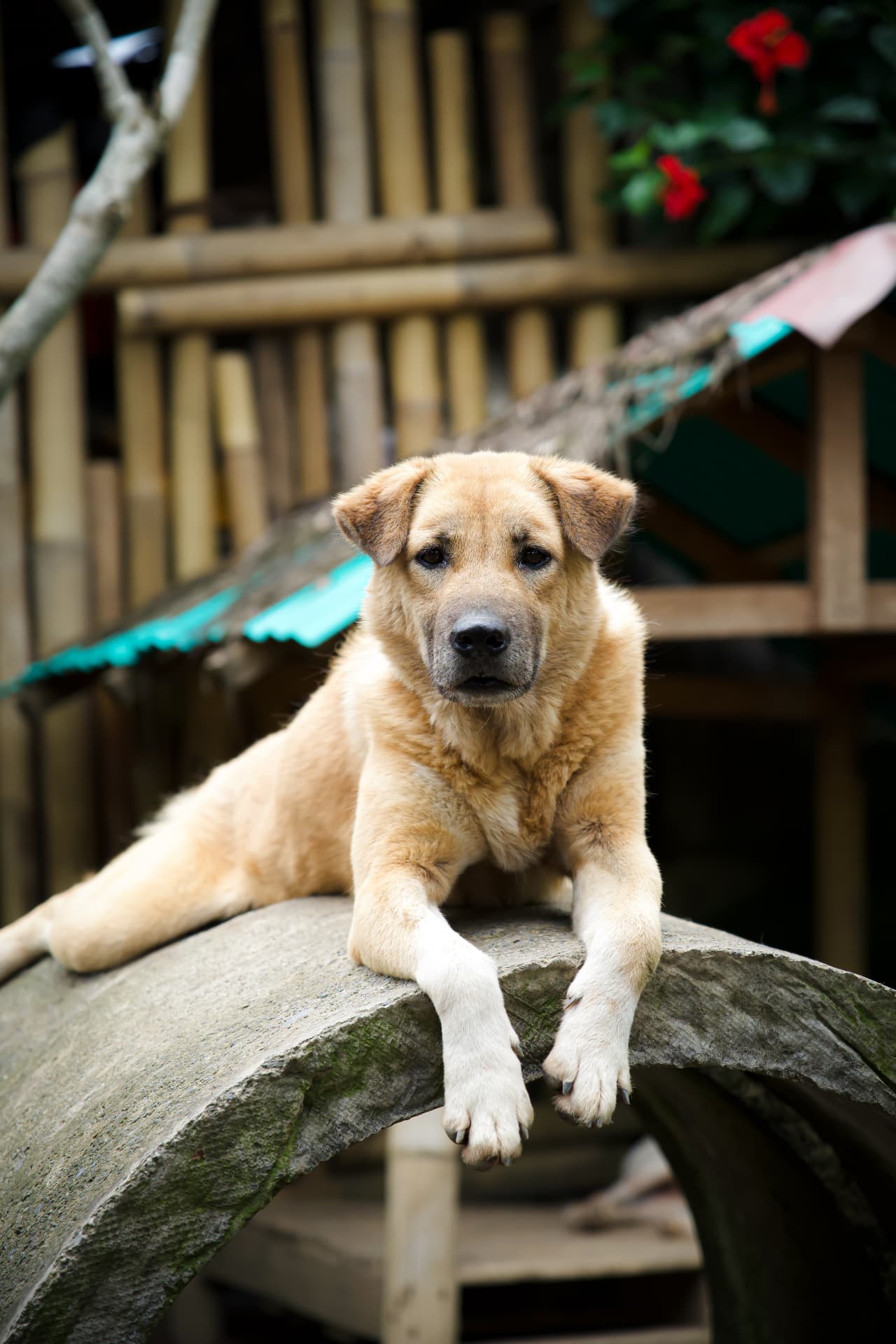
You found a dog
A street dog is usually frightened, not aggressive.
Read more →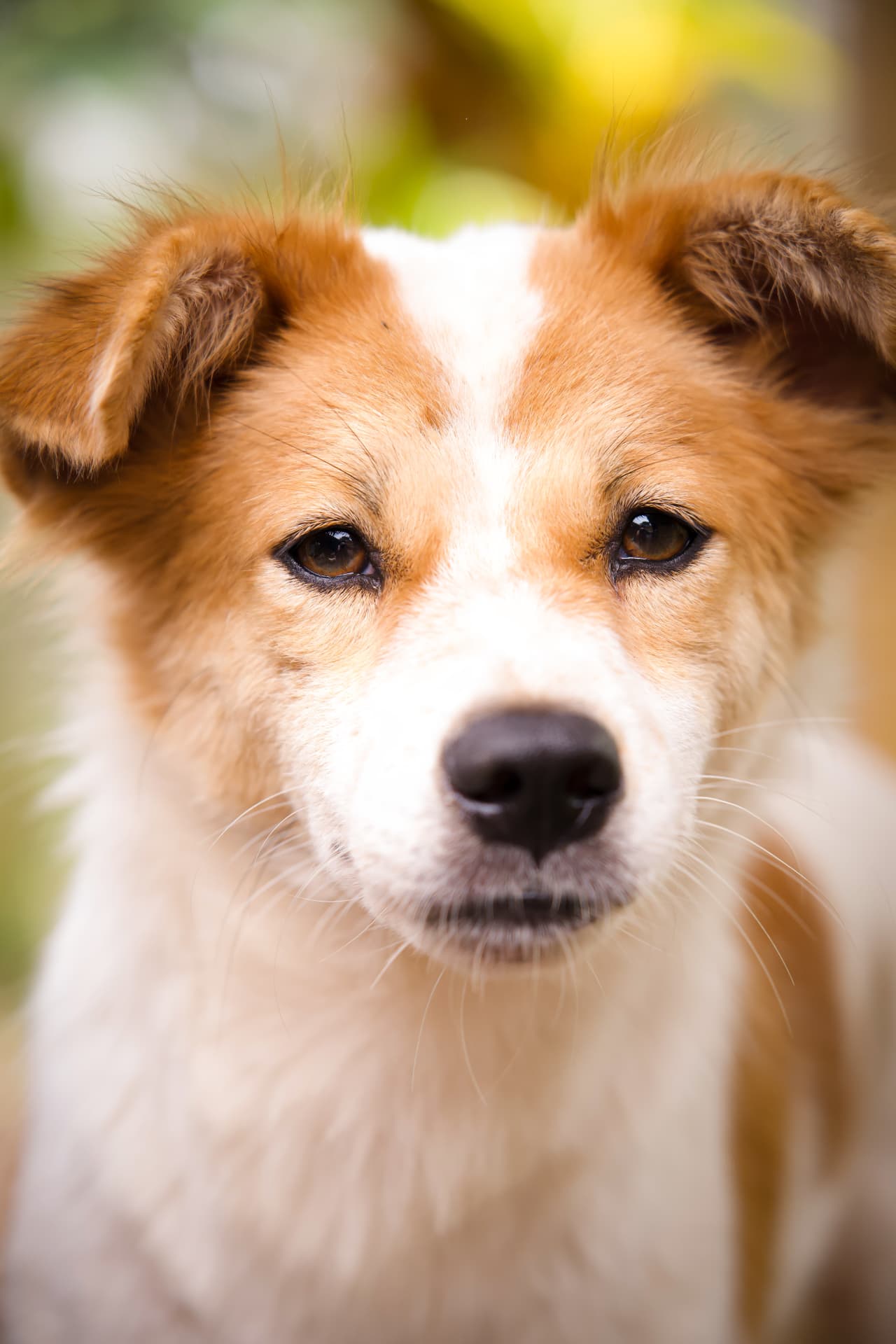
4 min read
Adopting a dog in Bali — the do's and don'ts
Bali dogs are intelligent, loyal and uniquely adapted to island life.
Read more →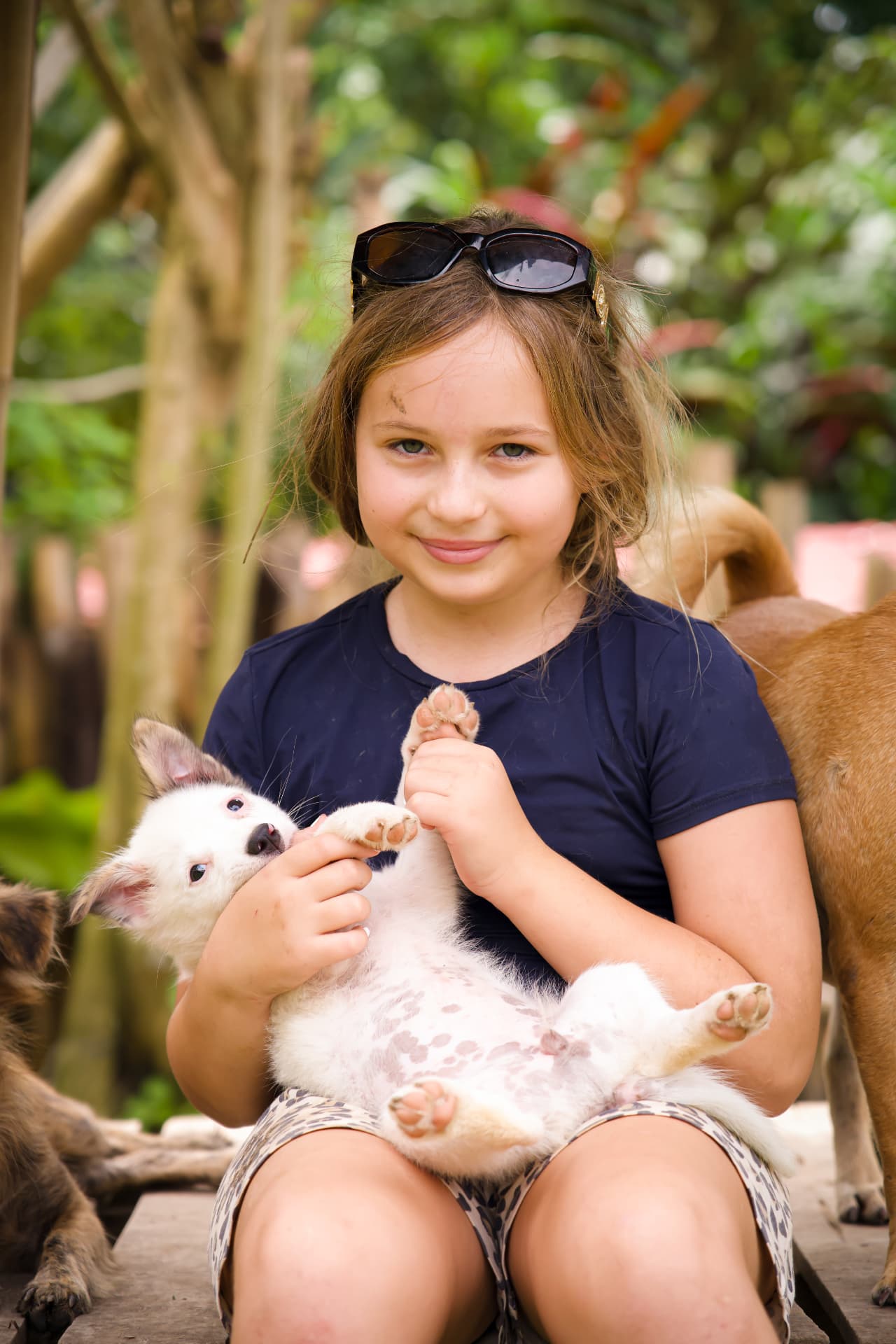
4 min read
How to foster a Bali dog — a home when they need one
Not everyone can adopt — and that is exactly why fostering matters.
Read more →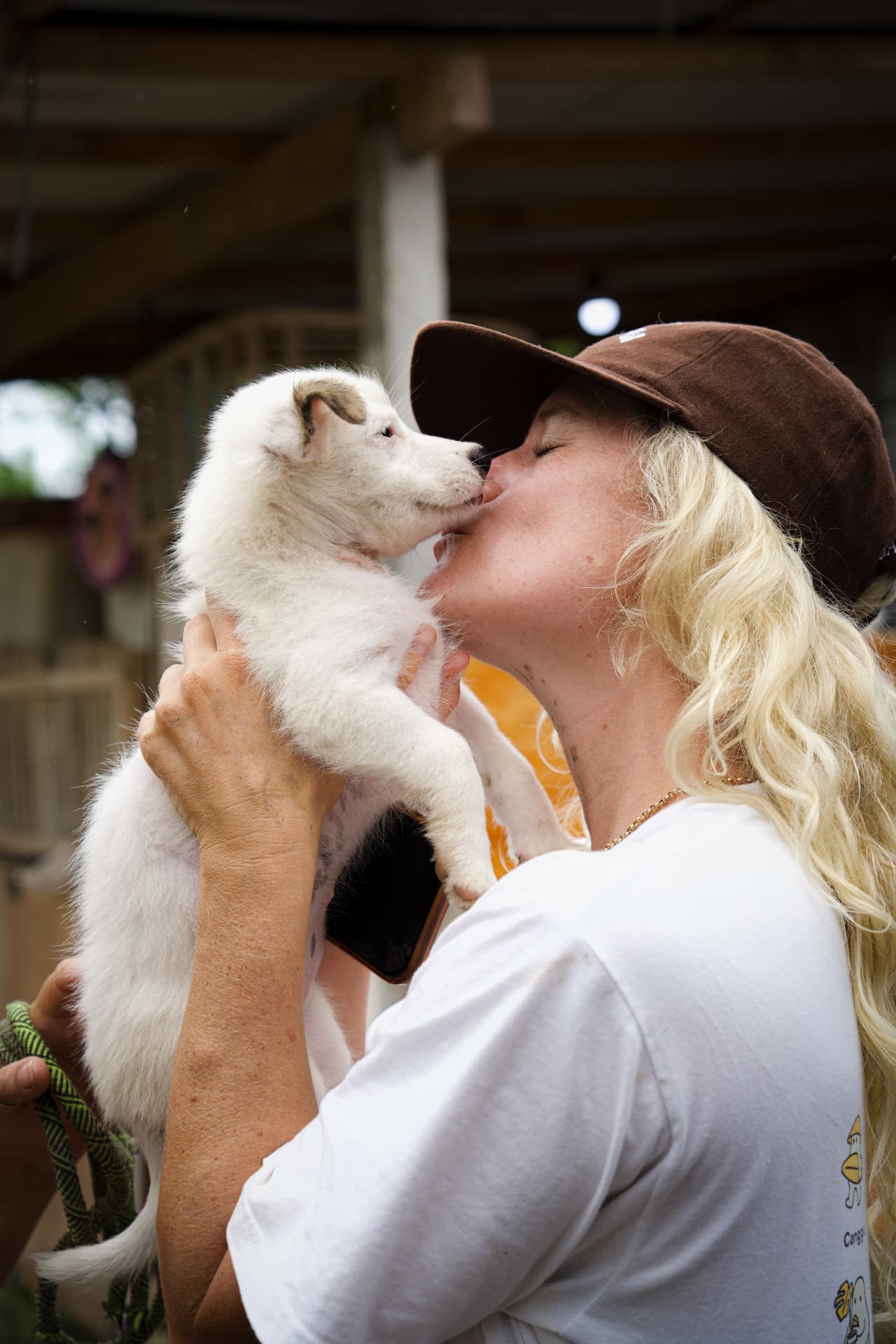
5 min read
Settling your adopted Bali dog — the first days, weeks and months
Most GAIA dogs spent their whole life on the street or in a shelter before you.
Read more →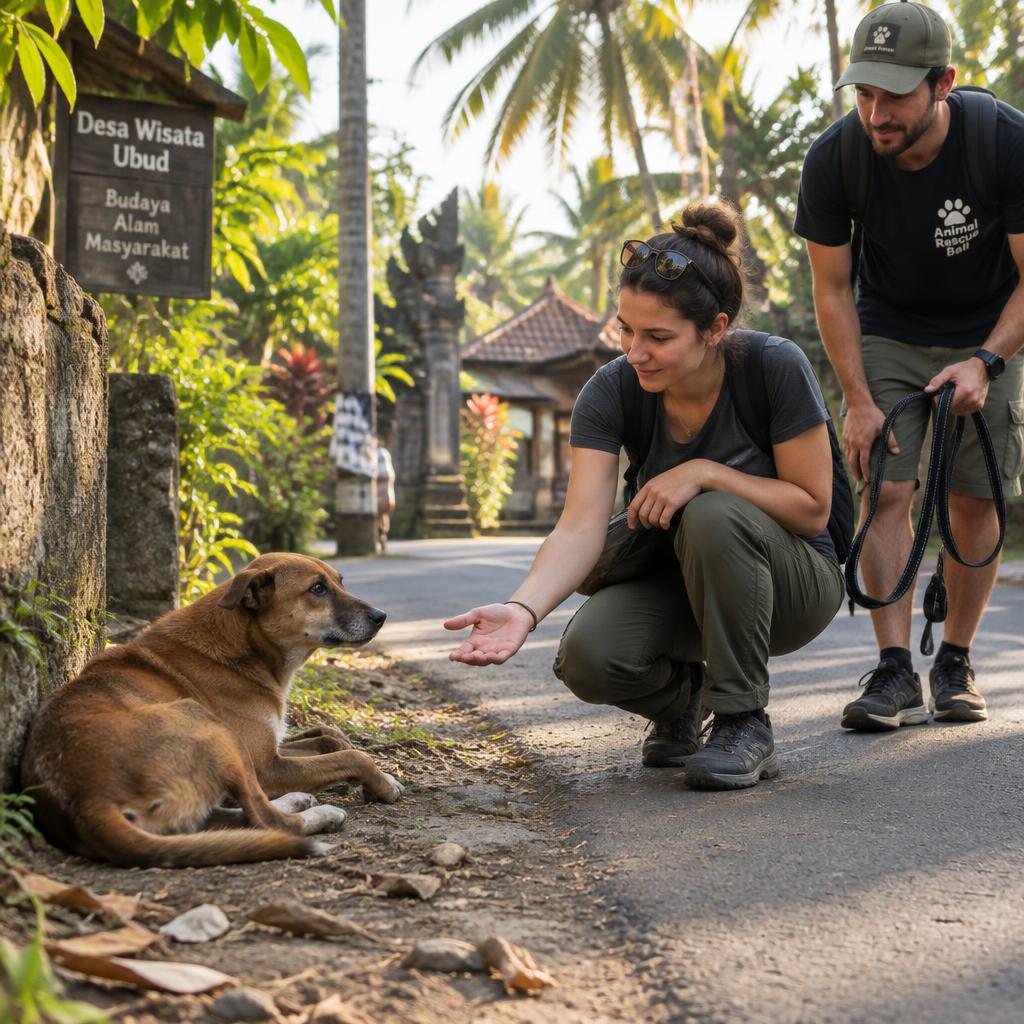
4 min read
First emergency responder — what to do
Before touching an injured dog, check your own safety.
Read more →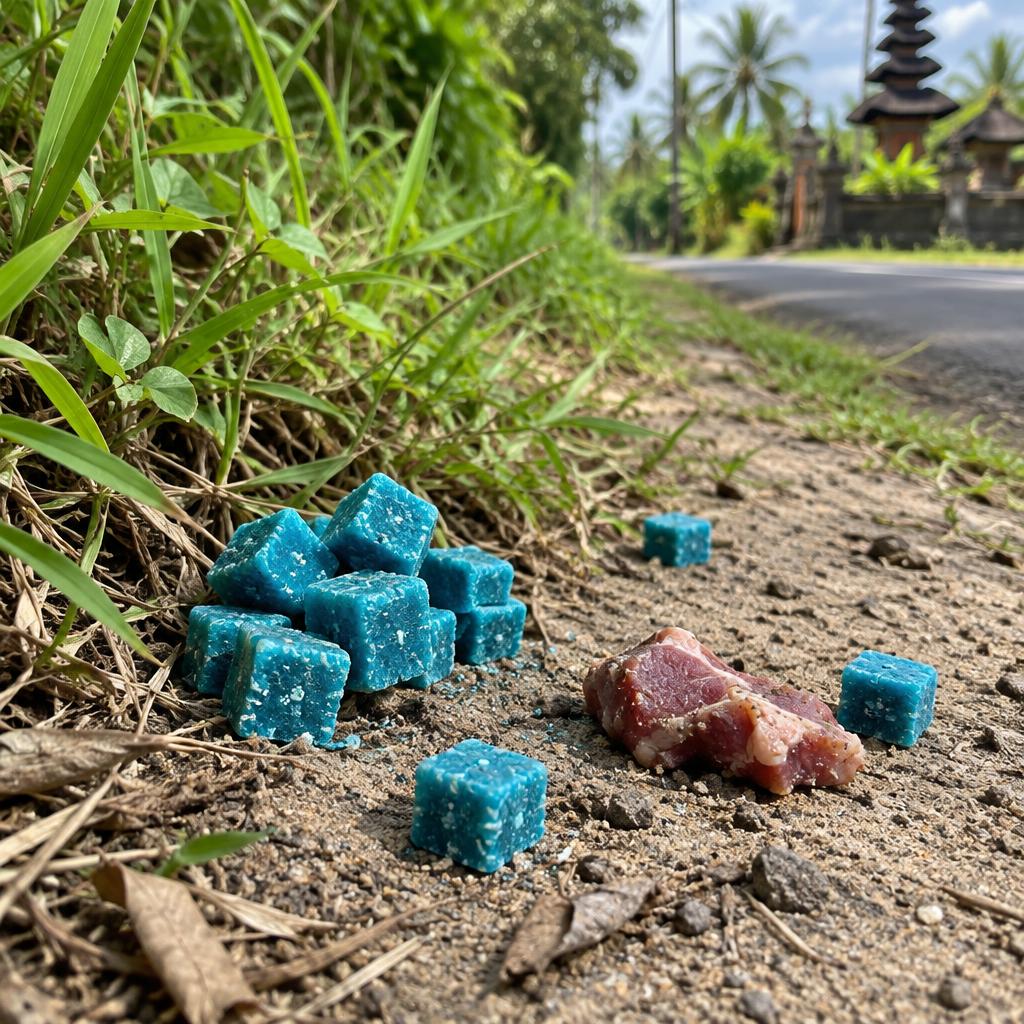
4 min read
Dog poisoning in Bali — the dangers and what to do
Dog poisoning is a serious, illegal and recurring danger across Bali, with active poisoned-bait incidents regularly reported in popular areas like Canggu, Cemagi, Seseh and Denpasar — with recent sightings in the Seseh area.
Read more →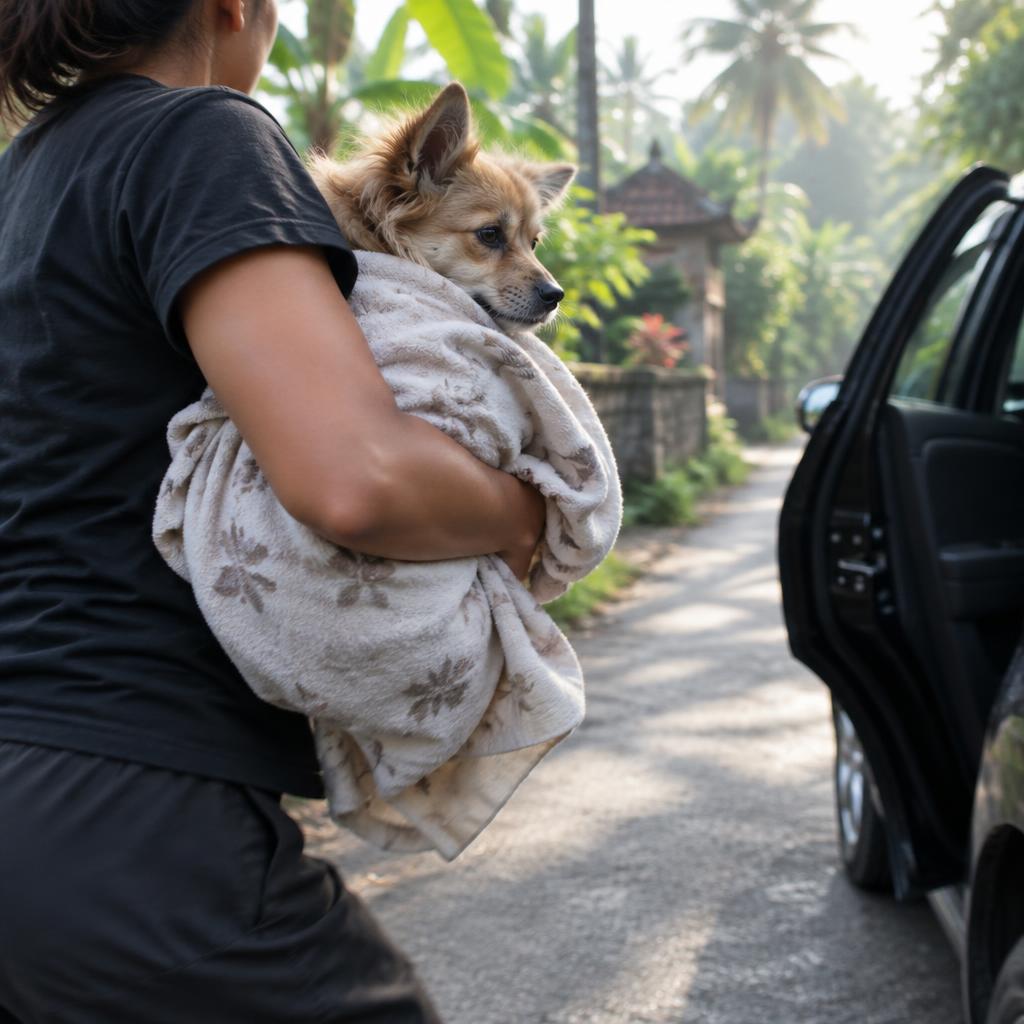
4 min read
Your dog ate poison — the first minutes decide
If your dog eats poisoned bait or shows poisoning symptoms, rush them to the nearest veterinary clinic straight away.
Read more →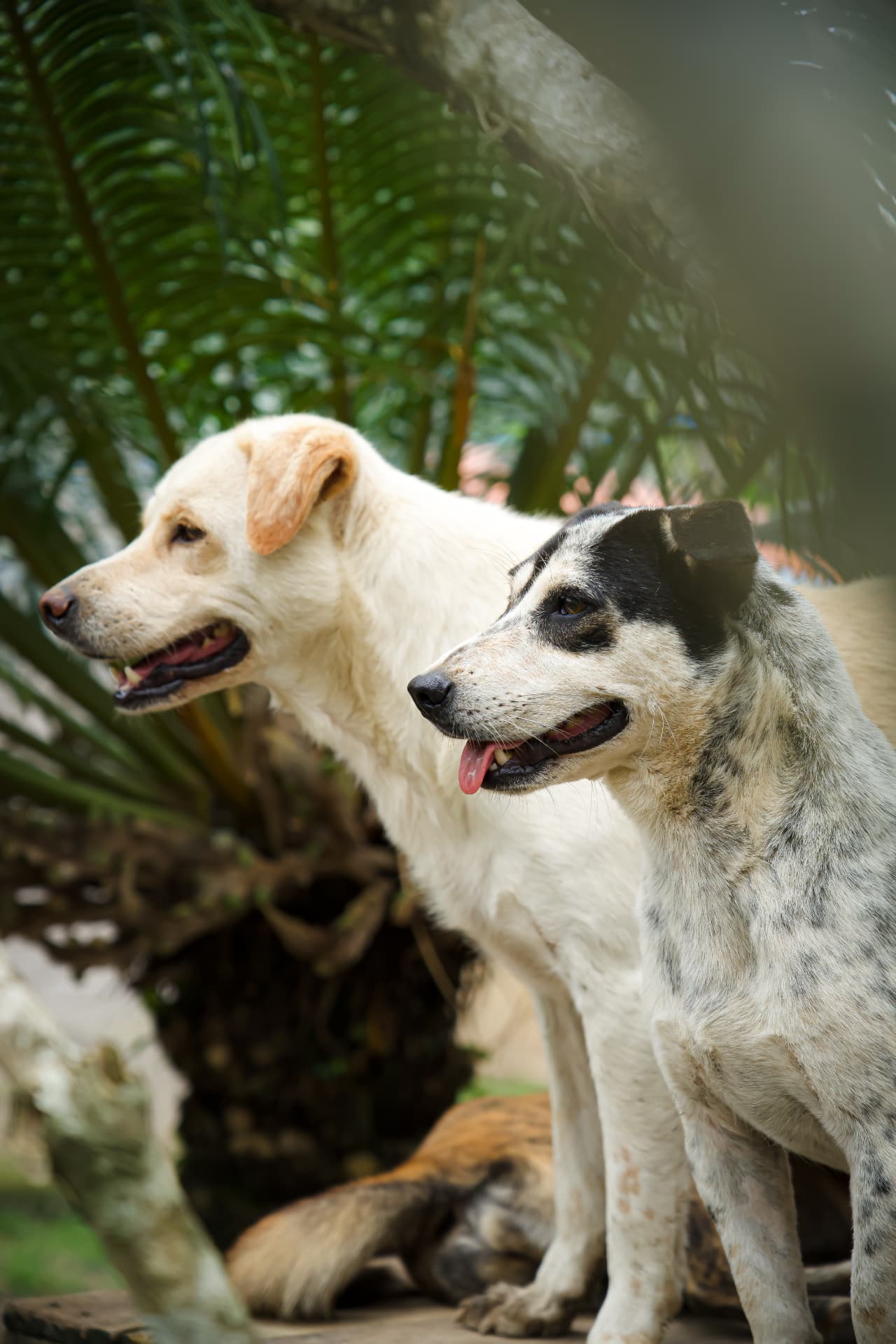
3 min read
Why sterilise your pet
One unsterilised female and her offspring can produce tens of thousands of dogs in a few years.
Read more →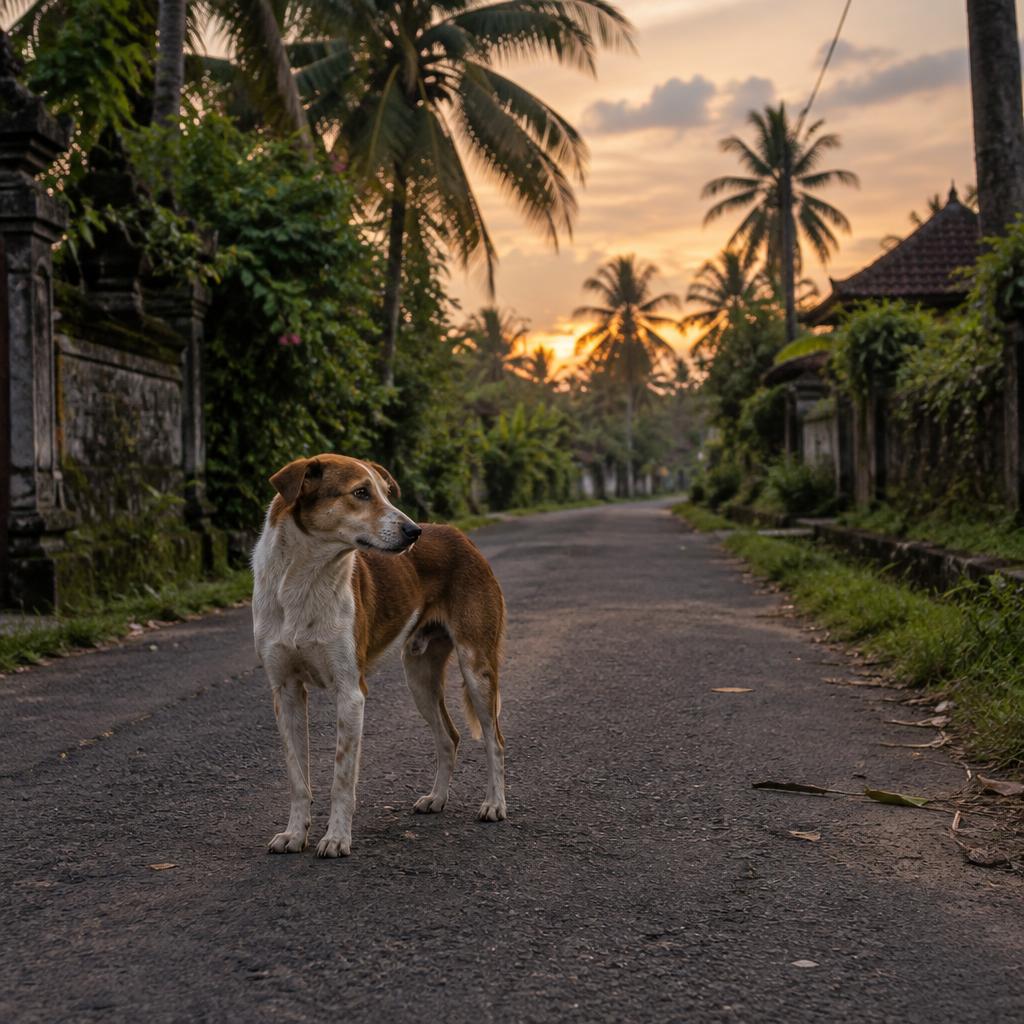
3 min read
Missing pets — finding your dog in Bali
A collar with your phone number is your dog's first safety net.
Read more →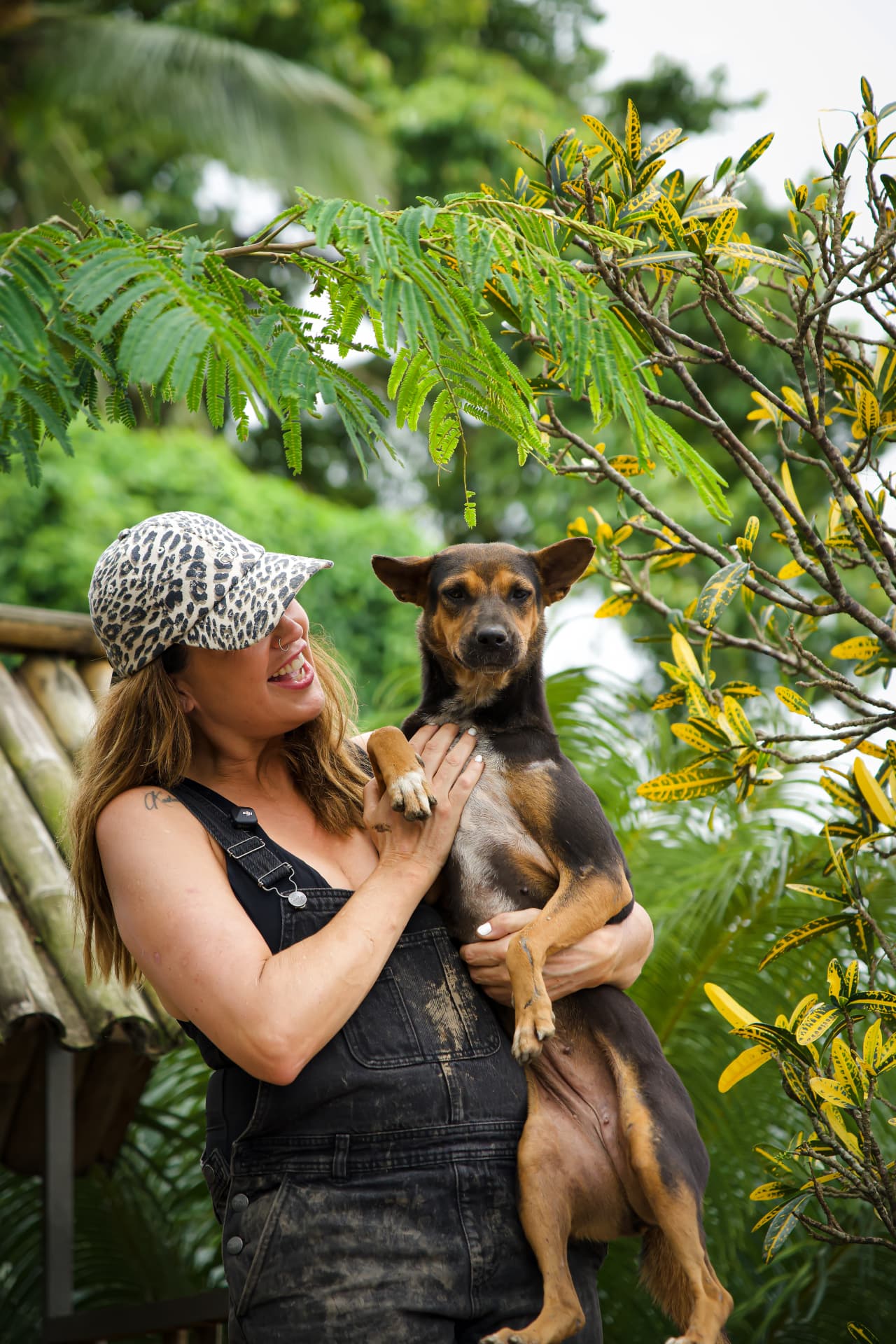
4 min read
A dog's basic needs — water, shelter, food, medication, grooming
Fresh, clean water in a shaded bowl, refilled twice a day, every day.
Read more →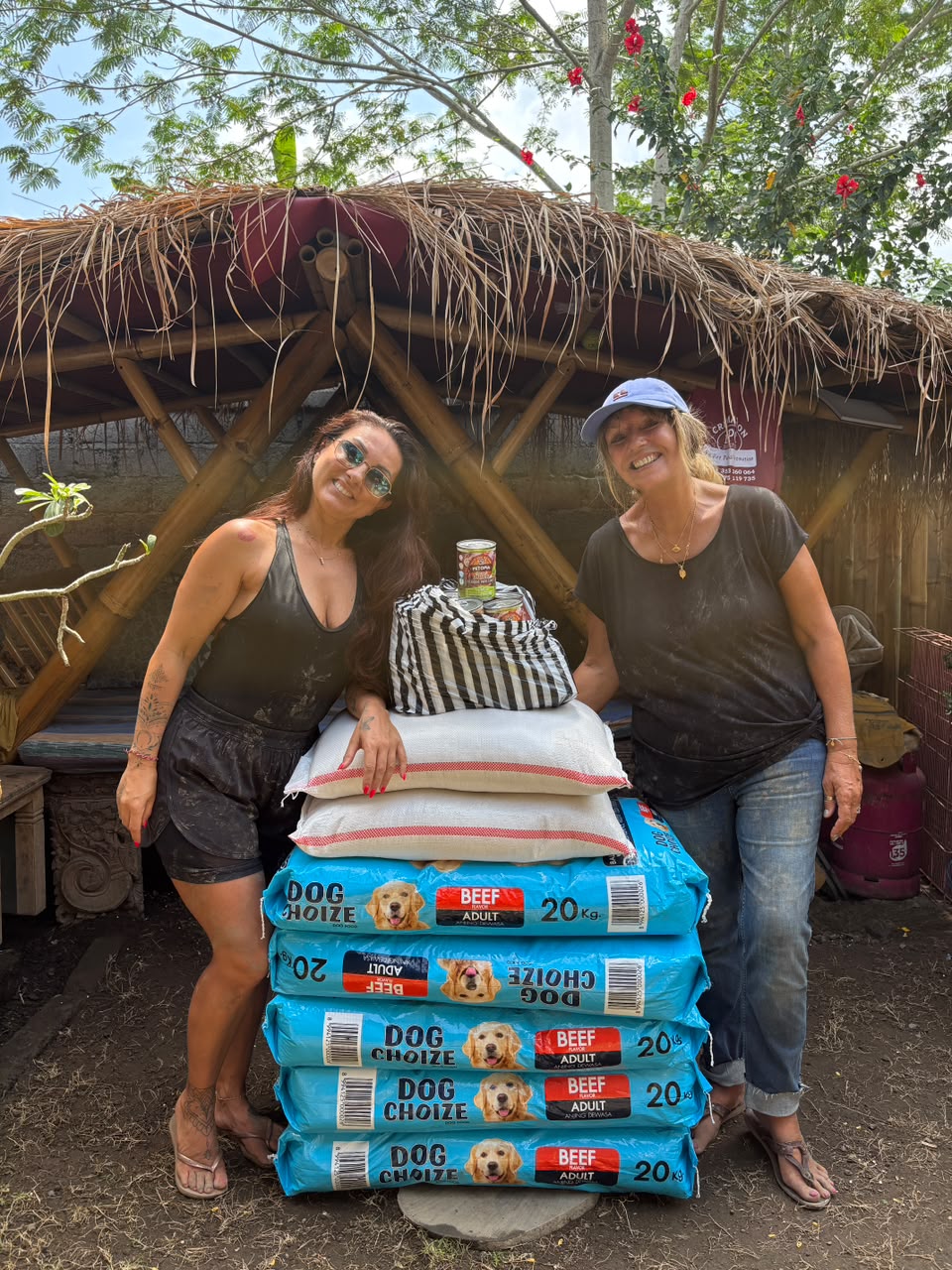
5 min read
What to feed your dog — beyond tinned meat and kibble
Our dogs deserve the best, and that means a variety of fresh, wholesome ingredients to keep them strong, fit and healthy.
Read more →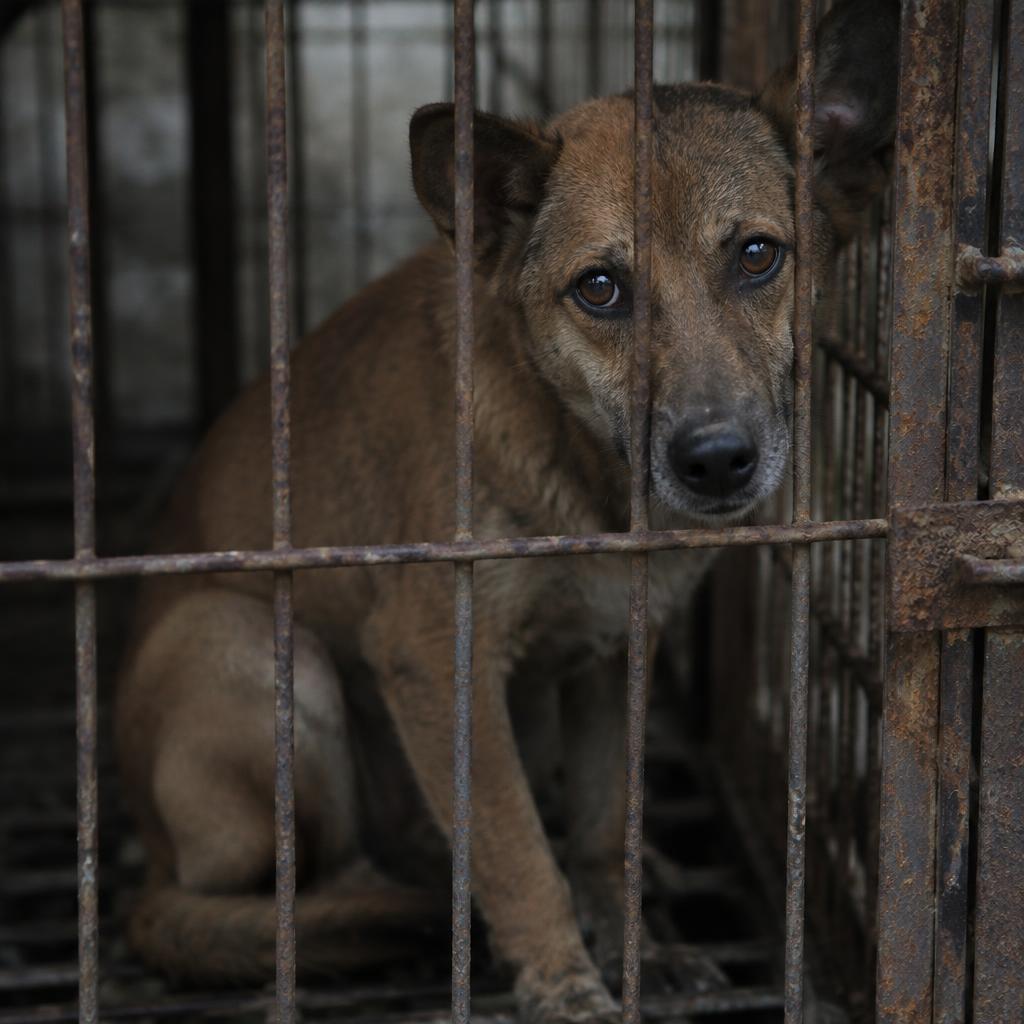
3 min read
Say no to animal cruelty — no chains, cages, violence
A dog chained for life is a dog in psychological collapse.
Read more →
2 min read
Our favourite places for dog essentials in Bali
The Dog House Cafe is our absolute favourite for all the obvious reasons.
Read more →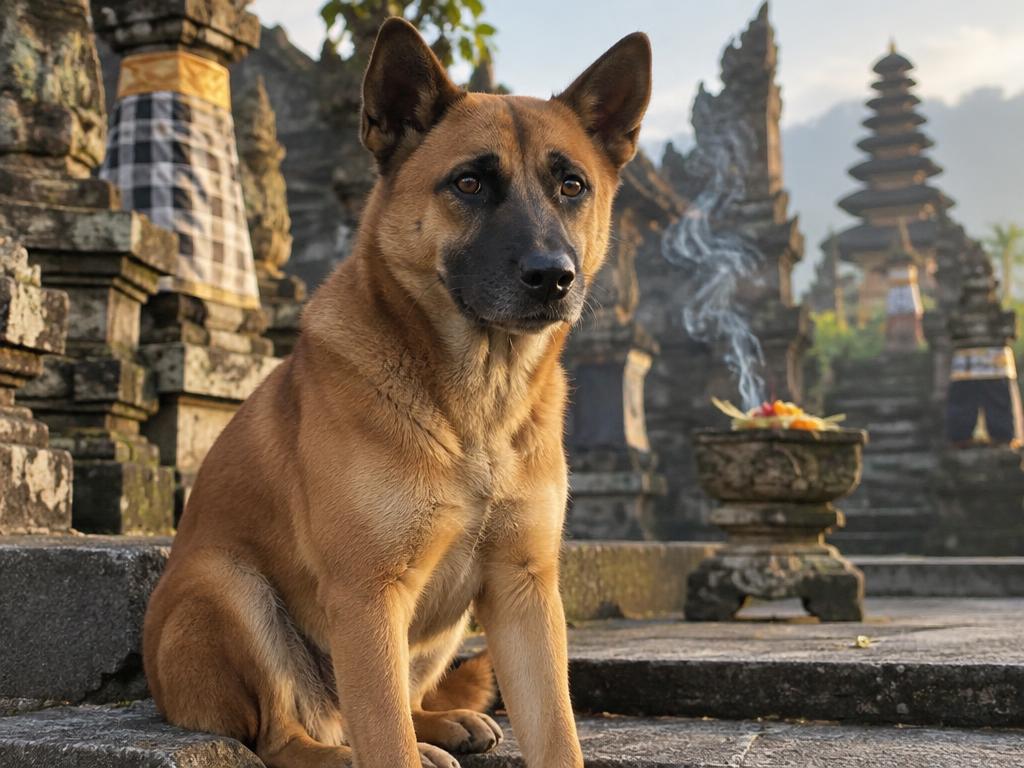
4 min read
The dogs that get sacrificed — the blang bungkem
In Balinese Hindu tradition, the caru (animal sacrifice) ceremony calls for a very specific dog: the blang bungkem — a red-furred dog with a black muzzle and tail.
Read more →
5 min read
When the festive season turns deadly for Bali's dogs
Every year, as December approaches and Bali fills with visitors, demand for dog meat quietly rises.
Read more →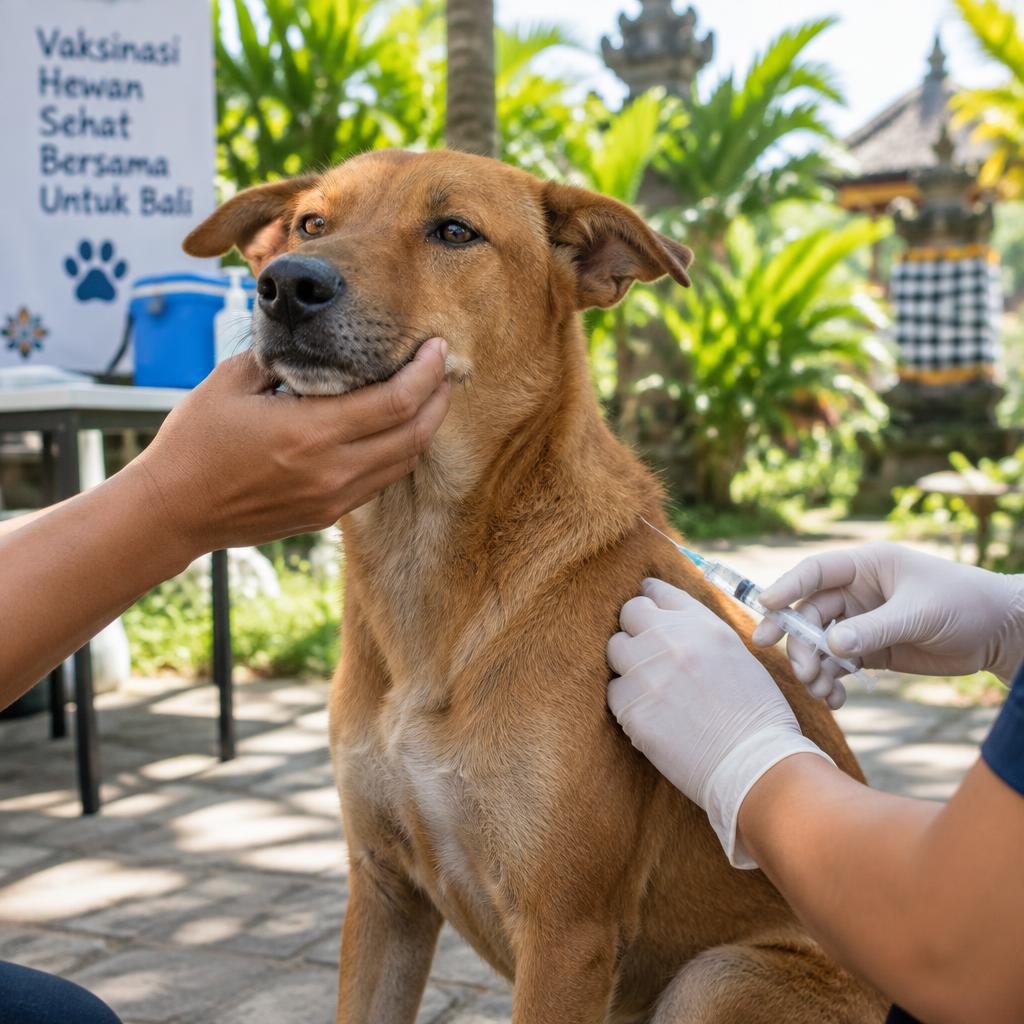
6 min read
Rabies in Bali — what every dog lover needs to know
Bali records the highest number of rabies cases in Indonesia.
Read more →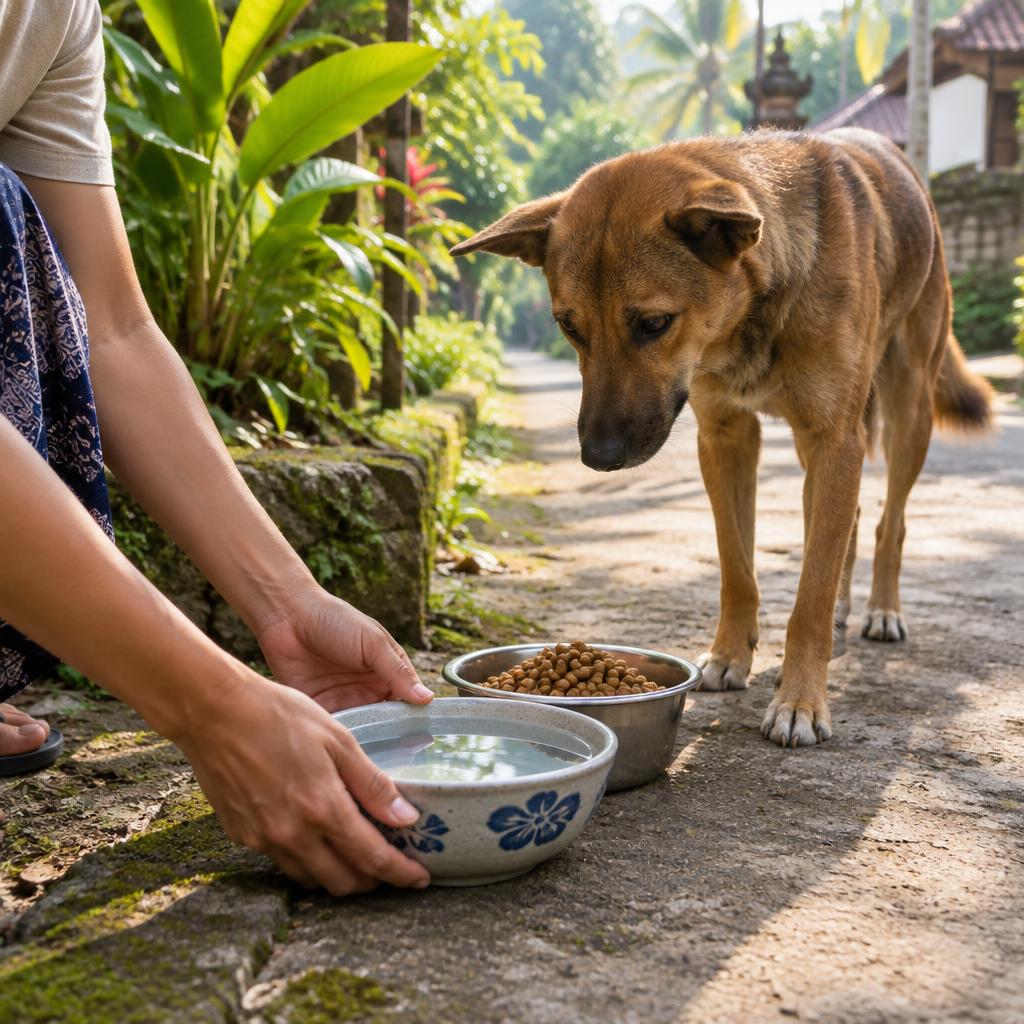
4 min read
How you can make a difference for Bali's street dogs
You do not need a rescue, a shelter or a budget to change a dog's life in Bali.
Read more →3 min read
You found a dog
Stay calm and stay safe
A street dog is usually frightened, not aggressive. Move slowly, avoid direct eye contact, and never grab. If the dog is injured, call a vet or a local rescue before trying to move them — a hurt dog may bite out of fear, not malice.
Capture it clearly — pictures, videos, location
Before anything else, take clear photos and a short video of the dog and the area around them. Note the exact location — a landmark, a street name, a Google Maps pin — so the team can find the dog or guide you. The more specific you are, the faster we can help. Share the pictures and the pin with us on Instagram or WhatsApp. If you need help from others, those photos and that location are what make a rescue possible.
Offer food and water
A little boiled rice, cooked chicken or dry kibble and a bowl of fresh water builds instant trust. Sit down nearby and let the dog come to you. Do not tower over them; lowering your body changes everything.
Check for an owner
Post the photos in local Bali Facebook groups (Bali Dog Adoption, Lost & Found Pets Bali) and on your Instagram. Many Bali dogs are owned and free-roaming — not every street dog is a stray.
If no owner steps forward
Message us on Instagram with your photos, video and location pin. If we have space, we can help with intake, sterilisation and rehoming. If we are full, we will help you find another trusted Bali rescue that has room. Be willing to do the rescue yourself — the team will guide you step by step, from catching the dog safely to transporting them. You are not alone in this; you just have to be the hands on the ground.
Quick tip
Always carry a small bag of kibble, a slip lead, and your phone with location on. You never know when a dog will need you.
4 min read
Adopting a dog in Bali — the do's and don'ts
Do: adopt a Bali dog
Bali dogs are intelligent, loyal and uniquely adapted to island life. They have lived alongside Balinese families for thousands of years. Adopting one is choosing a dog that belongs here — and giving a street dog a future they would never have had.
Do: think about the future
Before you fall in love, ask: where will I be in five years? Bali dogs can live 15+ years. If you may leave Bali, you need a plan — and a budget — for relocation. We help with export paperwork, but it must be part of your decision from day one.
Do: meet the dog more than once
Visit the sanctuary twice. Bring everyone who will live with the dog. A dog who is shy with us may bloom with you — and vice versa. We know our dogs, and we will tell you honestly who fits your home.
Don't: buy from a breeder
Breeder puppies fuel a trade that leaves thousands of street dogs to suffer. A pedigreed dog is not a better dog — just a more expensive one. The dog waiting at GAIA is already a good dog.
Don't: adopt on impulse
A puppy is a 15-year commitment to food, vet care, training, time and love. Take a week. Come back. Be sure — because being sure is the kindest thing you can offer a dog who has already been let down once.
Quick tip
Write down your daily routine for a week — walks, work, travel — before you adopt. The right dog fits your real life.
4 min read
How to foster a Bali dog — a home when they need one
A foster home is a bridge
Not everyone can adopt — and that is exactly why fostering matters. A foster home takes a dog out of the sanctuary and into a real house, a real garden, a real routine, for a few weeks. It is the bridge between rescue and a forever home. If you love dogs but cannot commit to fifteen years, fostering is the most direct way to be part of the solution. You give a dog grounding, confidence and a taste of family life — and then you let them go to the home that is waiting.
What a foster home needs
You do not need a palace. You need a fenced garden or yard, a quiet room inside your house, time each day for feeding, walking and simply being near the dog, and patience. A foster dog has lived on the street or in a shelter — your home is their first experience of a family. The basics matter more than anything fancy: a bed, fresh water, food twice a day, and a gate that shuts.
Your garden and your home
A secure, fenced garden is non-negotiable for a Bali foster dog. Street dogs are escape artists, and a dog who bolts on day one is a dog in danger. Check every gap under and along the fence before the dog arrives. Inside, set up one quiet room — a bed, water, a crate or corner to retreat to. Keep doors closed for the first days. The smaller the world, the faster the dog settles.
Other pets in the house
If you have a resident dog or cat, plan the introduction carefully. Meet on neutral ground — a walk outside, not inside the house — and walk them home together. Keep the foster dog separate at mealtimes for the first week. Feed in different rooms. Watch body language: loose tails, shared space and relaxed breathing mean it is going well. Stiffening, growling or hiding means step back and give it more time. Some foster dogs have never lived with another animal; let them adjust at their own pace.
The four-week minimum
We ask for a minimum of four weeks. That is not an arbitrary number — it is the time a rescue dog needs to find their feet. In the first week, the dog is in survival mode, often shut down or hiding. By week two, the routine starts to mean safety. By week three, you see the real dog emerge — play, trust, personality. By week four, they are grounded: they know your home, your hands, the shape of the day. A shorter foster can undo that progress — the dog is moved again before they have settled, and the fear resets. Four weeks gives a dog the grounding they need to carry into their forever home.
What GAIA covers
We provide the food, the vet care, the medication and the medical file. We know the dog's history, their vaccinations and their temperament, and we share all of it with you. What you provide is the thing we cannot: a home, a routine, a person who is there every morning and every evening. If something goes wrong — illness, behaviour, or the dog is not coping — message us immediately. We are on the other end of that text.
When the foster ends
Fostering ends when the dog is ready for adoption — sometimes with you, sometimes with a family who has been waiting. Saying goodbye is the hardest part, and it is also the point. Every dog you foster and release is a dog who leaves the sanctuary better prepared for the world. The sadness of goodbye is real, and it is outweighed every time by knowing you were the person who made a home possible.
Quick tip
Foster for a minimum of four weeks. A dog moved before they settle has to start over — and the fear resets every time.
5 min read
Settling your adopted Bali dog — the first days, weeks and months
A dog who has never had a home
Most GAIA dogs spent their whole life on the street or in a shelter before you. Your home is the first quiet, safe, permanent place they have ever known. That is a gift — and it is also overwhelming. Floors, stairs, the sound of a kettle, the smell of your kitchen — everything is new. In the first weeks, your job is not to train. It is to make the world smaller, calmer and safer, until your dog believes this is real.
Before the dog arrives
Set up one quiet room — a bed, water, food, and a corner they can retreat to. Check every fence, gate and low wall before the dog comes home; Bali dogs are escape artists, and the first instinct of a frightened dog is to run. Put away cleaning chemicals, electrical cords and anything chewable. Walk the boundary yourself, the way a dog would, and fix every gap.
What to expect — 3 days, 3 weeks, 3 months
Every adopted Bali dog settles at their own pace, but the shape is the same. The first three days are about survival — the dog is learning they are safe. The first three weeks are about trust — a routine builds, and the dog starts to look to you. By three months, the house is no longer new; your dog knows the day, the sounds, the smells, and where they belong. The squares below are a quick map — pin them to your fridge.
Food, health and patience
Feed twice a day — good kibble, or cooked rice with chicken or fish. Many newly adopted Bali dogs arrive with skin conditions, ticks or a sensitive stomach from street life. Start a monthly flea, tick and heartworm treatment and book a vet visit in the first week, even if the dog looks fine. Bring the medical file we give you — every vaccination, sterilisation and treatment is recorded there.
When it is hard
Some dogs hide for days. Some will not eat on the first night. Some bark at sounds you no longer notice. This is not a problem — it is a dog learning to feel safe. Do not force affection, do not reach into their hiding spot, and do not take a setback personally. The dog who ignores you for a week is often the dog who sleeps on your feet by month three. Trust takes time, and time is the only thing that creates it.
The long view
A Bali dog can live fifteen years or more. Before you adopt, think honestly about where your life will be in five, ten, fifteen years — and whether a dog fits that life. If you may leave Bali, we help with export paperwork, crates and flight logistics, but the decision and the cost are yours from day one. Adoption is not a trial run; it is a promise. Make it knowing what it means.
The first days, weeks and months
First 3 days
Decompress
Quiet. One room, one bed. Let the dog come to you. No visitors, no excitement.
First 3 weeks
Build trust
Same routine, same hands. Hand-feed. The dog starts to look to you.
First 3 months
Settle in
They know the day. They choose to lie near you. The real bond begins.
Lead and off lead
On lead
Always, at first
Every walk is trust training — your voice, your pace, your steady presence.
Off lead
When recall is solid
Fenced area only, and only when your dog comes every time. Never near traffic.
Quick tip
The dog who hides under the bed for a week is not failing — they are surviving. Sit on the floor, read a book, and let them come to you.
4 min read
First emergency responder — what to do
Assess before you act
Before touching an injured dog, check your own safety. Traffic, steep drops and scared mothers all create real risk. A dog hit by a car can still bite — approach from behind, speak softly, and use a towel or sarong to lift if they are in pain.
Stop the bleeding
Apply firm pressure with a clean cloth. A torn sarong works. Do not lift a broken limb — splint it gently with a rolled magazine or stick and tape, then move the dog as little as possible.
Keep them warm
Shock kills faster than the wound. Wrap the dog in a sarong or jacket, keep them out of direct sun, and offer water only when they are fully alert. Never pour water into a semi-conscious dog's mouth.
Get to a vet fast
Message your nearest vet on WhatsApp with a photo and your location. Keep a list of 24-hour Bali vets saved in your phone before you ever need them. Most will advise on stabilisation before you arrive.
Quick tip
Save the WhatsApp numbers of two local vets before an emergency — you won't have time to search when one happens.
4 min read
Dog poisoning in Bali — the dangers and what to do
A real and recurring danger
Dog poisoning is a serious, illegal and recurring danger across Bali, with active poisoned-bait incidents regularly reported in popular areas like Canggu, Cemagi, Seseh and Denpasar — with recent sightings in the Seseh area. Knowing what poisoned bait looks like — and acting fast — saves lives.
Poisoned baits
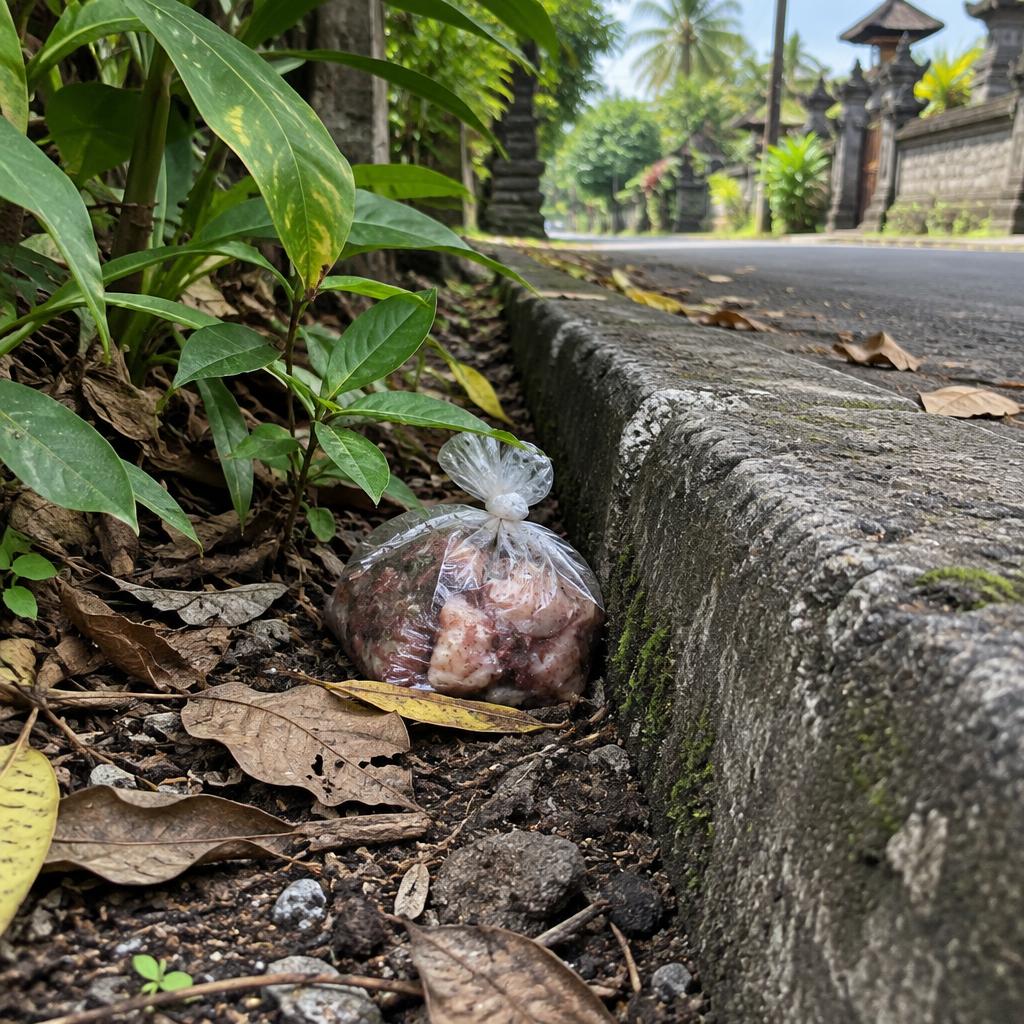
Perpetrators often leave small plastic bags, laced meat, or spiked food items near streets, beaches and rice fields. The bait is designed to be eaten, and dogs find it long before people do.
Types of poison
Vets in Bali have identified fast-acting nerve toxins, pesticides, and blue rat-poison cubes among the substances used. If you see small blue cubes or coloured, poisoned meat lying on the ground, keep every dog well away and report it — do not touch it with bare hands.
Why it happens
Incidents may stem from local pest control, fears over rabies, or the illegal dog meat trade. Whatever the motive, it is illegal — and every report helps build the picture that protects the dogs in your area.
Muzzle and leash
Always use a tight leash and a basket muzzle when walking your dog on streets or beaches, to stop them eating ground debris. A basket muzzle still lets your dog pant and drink while blocking everything they try to pick up.
Supervision
Keep pets strictly indoors or closely monitored in secure yards, especially during early morning hours, when baits are most often laid and dogs are most often walked.
Scan the area
Inspect your walking path for suspicious food packages, bones, or coloured meat before your dog reaches them. The blue cubes can look deceptively like dog treats — that is exactly what makes them deadly.
Carry emergency items
Keep activated charcoal (such as Norit tablets) on hand during walks, though you must still rush to a vet immediately if ingestion occurs. Charcoal can slow absorption on the way, but it is never a substitute for emergency veterinary care.
How to report an incident
If you witness suspicious activity, find poisoned bait, or need urgent help, take photos or video evidence (including vehicle licence plates) and contact local authorities or animal welfare groups immediately. Inform your local village leader or neighbourhood head (banjar). Contact the Bali Animal Welfare Association (BAWA) via WhatsApp at +62 811-389-004 or email info@bawabali.com — or message GAIA directly on Instagram and we will help however we can.
Quick tip
Never let your dog sniff-and-eat off the ground on walks — a basket muzzle and a tight leash are the simplest life insurance in Bali.
4 min read
Your dog ate poison — the first minutes decide
Act immediately — drive, don't wait
If your dog eats poisoned bait or shows poisoning symptoms, rush them to the nearest veterinary clinic straight away. Poisoning is a critical emergency and any nearby clinic is better than waiting for the perfect one. Message or call the vet on the way so they can prepare, and bring a photo of the bait if you can — knowing the poison changes the treatment.
24/7 emergency vets
BVC24H Bali Veterinary Clinic (Pererenan / Canggu) — +62 811-3893-171 on WhatsApp: a fully equipped animal hospital with a reputation for calm, rapid response to poisoned dogs. Semer Vet Care (Kerobokan Kelod) — +62 819-9994-2649: trusted 24-hour care, popular with the Canggu and Seminyak rescuer community. Central Vet (Kerobokan) — +62 811-3890-030 on WhatsApp: excellent diagnostics and an on-site ward for overnight IV fluids. Sunset Vet Kuta (Kuta / Legian) — +62 361 9348915: one of the island's most modern animal hospitals, though night emergency rates run higher. Hadiprata Vet (Kerobokan Kelod) — +62 822-8887-7886: exceptional at any hour of the night and highly supportive of street dog rescues. Call or WhatsApp on the way so their team can prepare antidotes before you arrive.
Keep them warm, quiet and still
Keep the dog calm during transport: wrapped in a blanket, held gently, movement kept to a minimum. Struggling burns through their strength fast, and shock kills as quickly as the poison itself.
Never do these
Never induce vomiting if the dog is unconscious, having seizures, or having trouble breathing — they can choke. And do not guess remedies: avoid random home treatments like milk, oil or salt unless a professional explicitly directs you. Nothing you pour down their throat is worth the delay.
Signs of poisoning
Drooling or foaming at the mouth, vomiting, tremors or seizures, wobbliness, sudden weakness, difficulty breathing, or collapse. Fast-acting nerve toxins can show symptoms within minutes — if you see any of these after a walk, treat it as poisoning until a vet says otherwise.
Charcoal — only if they are fully alert
Activated charcoal can absorb remaining toxin in the gut, but it must only be given if the dog is fully alert, conscious and stable — give it while on the way to the vet or under a vet's direction. Never delay transport to arrange charcoal, and never give it to a dog who is drowsy, seizing or struggling to breathe — the slurry can be inhaled and cause fatal choking.
How much charcoal
A commonly used emergency dose is 1–3 grams of activated charcoal per kilogram of body weight — so roughly 10–30 grams for a 10 kg dog. Crush the tablets (such as Norit) and mix with a small amount of water or wet food into a thin slurry, and give it carefully along the gum line so nothing goes down the wrong way. Check the pack: most tablets contain only a fraction of a gram each, so you may need many — a powder or liquid suspension works far better. And remember: charcoal buys time on the drive, it does not cure — the vet is the cure.
If you find a poisoned street dog
Do not touch the bait with bare hands. Wrap the dog in a towel or sarong, keep them still and warm, and drive to the nearest vet — most Bali clinics will start treatment and worry about payment after. Take photos of the dog, the bait and the exact location, then report it: your banjar, BAWA on WhatsApp at +62 811-389-004, info@bawabali.com — or message GAIA on Instagram and we will guide you through it.
Quick tip
Save GAIA's number and two vet clinics in your phone right now — in a poisoning, the minutes you save searching are the minutes that decide everything.
3 min read
Why sterilise your pet
Sterilisation saves lives
One unsterilised female and her offspring can produce tens of thousands of dogs in a few years. On Bali, where thousands of dogs already live on the streets, every litter adds to the suffering. Sterilisation is the single most effective, humane way to break that cycle.
Healthier dogs
Sterilised females have a far lower risk of mammary tumours and pyometra, a fatal uterine infection. Neutered males roam less, fight less, and are less likely to be hit by traffic or injured in territory disputes.
Calmer, happier homes
Sterilised dogs are often more settled, less anxious and easier to train. The myth that a dog 'should have one litter' is just that — a myth. There is no welfare benefit to a single litter.
When and where
Puppies can be sterilised from around four months old. We can recommend trusted, affordable vets across Bali. If cost is a barrier, message us — low-cost and free sterilisation days run regularly across the island.
Quick tip
Sterilise before the first heat for the biggest health benefit. Book it at four months — don't wait.
3 min read
Missing pets — finding your dog in Bali
Collar and tag, every day
A collar with your phone number is your dog's first safety net. Bali dogs are often picked up by well-meaning people who assume a loose dog is lost — a readable tag brings them home in hours, not days.
Microchip before they wander
Collars come off; chips don't. Microchipping is quick, cheap and permanent, and most Bali vets can do it at a vaccination visit. Keep the chip number saved and register it with your contact details.
Lost? Act in the first hour
Post a clear photo in local Facebook groups (Lost & Found Pets Bali, your area's community page), share on Instagram Stories, and walk your usual routes calling softly — not shouting. Leave a worn item of your clothing where the dog was last seen.
Ask the banjar
Local neighbourhood watch groups (banjar) know every dog on their patch. A polite visit with a photo often finds the dog the same day. Offer a small reward — it works, and it spreads the word fast.
Quick tip
Photograph your dog from the side, in good light, today. Keep that photo saved — it's the one you'll need if they ever go missing.
4 min read
A dog's basic needs — water, shelter, food, medication, grooming
Water, always
Fresh, clean water in a shaded bowl, refilled twice a day, every day. In Bali's heat a dog can dehydrate in hours. Wash the bowl weekly — green bowls make dogs refuse water.
Shelter from sun and rain
A dog needs a dry, shaded spot to retreat from midday sun and sudden downpours. A raised bed or mat under a roof, out of the wind, is enough. A dog left chained with no shade is not cared for — it is cruelty.
Real food, every day
Good kibble, cooked rice with chicken or fish, or a quality raw diet — feed twice a day and adjust to your dog's weight and energy. Avoid spiced leftovers; onion, garlic and chocolate are toxic. If you can, choose a food made for dogs, not table scraps.
Vaccinations and parasite control
Annual rabies vaccination is legally required in Bali and protects your dog, your family and your community. Combine it with the core vaccine and monthly tick, flea and heartworm prevention. It costs little and prevents everything.
Grooming and touch
Brush weekly, check ears and paws, bathe when needed — not daily, it strips natural oils. Touch your dog all over so a vet examination is never a fight. Nails that click on the floor are too long.
Quick tip
Set a weekly phone reminder: 'paws, ears, nails.' Two minutes a week stops most problems before they start.
5 min read
What to feed your dog — beyond tinned meat and kibble
Gone are the days of tinned meat and kibble diets
Our dogs deserve the best, and that means a variety of fresh, wholesome ingredients to keep them strong, fit and healthy. A dog fed on the same dry pellets every day may survive — but they will not thrive. The fresher and more varied the diet, the better their coat, their eyes, their energy and their immune system. And the less you spend on vet care.
Why diet matters more than you think
A dog's food is the single most important thing in their life after us. Poor nutrition shows up everywhere — dull fur, itchy skin, low energy, weight gain, repeat vet visits. A dog on a fresh, varied diet has a glossy coat, bright eyes, calm energy and a stronger immune system. The fresher the food, the healthier the dog.
A raw, varied diet
Dogs are carnivores. A raw food diet — high-quality raw meat and bone, complemented with offal, vegetables, fruit and herbs — gives them the full range of nutrients they need. Variety is the key: chicken, duck, turkey, beef, lamb, pork, fish, buffalo, rabbit. Rotate your proteins so your dog gets a broad spectrum of amino acids and minerals. No grain, no gluten, no fillers, no preservatives.
Build your own fresh meals
You do not have to buy everything pre-made. Cooked rice with chicken or fish, raw eggs, plain yogurt, steamed vegetables, a little liver or heart — these are real food, and they are cheaper than premium kibble. Feed twice a day, morning and night, and always leave a large bowl of fresh water out. Adjust portions to your dog's weight and energy.
Foods to avoid
Onion, garlic, chocolate, grapes, raisins, avocado, macadamia nuts, caffeine and alcohol are toxic to dogs. Spiced leftovers, salty human food and anything with xylitol (a common artificial sweetener) can make your dog very sick. If you would not feed it to a child, think twice before feeding it to your dog.
Where to buy in Bali
For ready-made raw meals delivered to your door, we recommend Kin Dog Food — they offer a wide variety of high-quality raw meals with no grain, gluten or fillers. You can also build your own fresh meals from local markets and butchers. The point is not which brand you choose — it is that you choose fresh, varied, real food over tinned meat and dry kibble alone.
Quick tip
Rotate your proteins every week. A dog fed chicken every day is not getting the full picture — switch between chicken, beef, fish and lamb.
3 min read
Say no to animal cruelty — no chains, cages, violence
A chain is not a home
A dog chained for life is a dog in psychological collapse. Chaining causes anxiety, aggression, sores and self-harm. A dog is a social animal — they need movement, company and choice. A fenced yard or a daily walk is the minimum, always.
Cages are not care
A cage used for short travel or overnight recovery is fine. A cage used as permanent housing is cruelty. If you cannot give a dog a room to live in, do not take a dog. There is no middle ground.
Violence teaches nothing but fear
Hitting, shouting or kicking a dog does not train them — it breaks them. Fearful dogs bite, run, and shut down. Kind, consistent training works faster and lasts longer. If you are frustrated, walk away and come back in five minutes.
If you see cruelty, report it
In Bali you can report serious cruelty to Animal Friends Bali or the local banjar with photos and location. You can also message us — we will help you find the right people. Speaking up is not interfering; it is the law of care.
Quick tip
If you can't say 'my dog chose to come to me today,' something is wrong. Fix the environment, not the dog.
2 min read
Our favourite places for dog essentials in Bali
The Dog House Bali
The Dog House Cafe is our absolute favourite for all the obvious reasons. Dog-friendly, people-friendly, and every visit supports adoption. Take your dog, or meet one who needs a home.
Kin Dog Food
Small-batch, human-grade dog food made in Bali. A great option for owners who want clean ingredients and real nutrition without imported prices. Kin also supports local rescues — buying from them helps dogs beyond your own.
Kali Dogwear
Thoughtfully made collars, harnesses and leads designed for Bali's climate — washable, durable and kind to fur and skin. A good harness stops pulling and protects your dog's neck on busy roads.
The Paws Bali
Grooming, supplies and honest advice from people who genuinely love dogs. Worth the visit for a calm, fear-free groom and a chat about what your dog actually needs.
The Dog Club
A social space for well-socialised dogs to run, train and make friends. Off-lead time in a safe, fenced area is one of the best gifts you can give a Bali dog — and a tired dog is a good dog.
Dogville — boarding
Trusted, caring boarding when you travel. Leaving your dog is hard; leaving them with people who treat them like family makes it bearable. Always visit first, and book early — good places fill fast.
Quick tip
Always visit any groomer, day-care or boarding facility before you book. Trust your gut — if it doesn't feel right, walk away.
4 min read
The dogs that get sacrificed — the blang bungkem
What is the blang bungkem?
In Balinese Hindu tradition, the caru (animal sacrifice) ceremony calls for a very specific dog: the blang bungkem — a red-furred dog with a black muzzle and tail. Many Balinese Hindus believe that ignoring the caru will bring catastrophe or chaos, and the great Resi Gana ceremony cannot take place without the sacrifice of this one particular dog.
Why it still happens
Hinduism came to Bali 1,200–1,500 years ago, and the belief runs deep: sacrificed animals are thought to be reincarnated into a higher life, and those who sacrifice them earn the same reward. Most heartbreaking of all, many younger Balinese we speak to no longer know why the sacrifice is required — they simply repeat what their grandparents and great-grandparents did for generations.
Targeting the red dogs
Because the ceremony demands that specific colouring, red-brown puppies with black muzzles are actively sought out, bought and traded. Street dogs of that colouring live with a target on their backs — which is one reason we never turn a red dog away, and why some of the most fearful dogs in our care arrived this way.
There is hope — and a kinder path
Slowly, people are questioning the tradition and finding new, less cruel ways to appease the demons — symbolic offerings, flowers and rice in place of a life. Change is coming from within the Balinese community itself. There is still a long way to go, but every conversation, every rescued red dog, and every family that chooses kindness moves it forward.
Quick tip
If you see a red, black-muzzled dog being caged, traded or taken toward a ceremony, message us — we will always try to find room for a blang bungkem.
5 min read
When the festive season turns deadly for Bali's dogs
The season no one talks about
Every year, as December approaches and Bali fills with visitors, demand for dog meat quietly rises. Around 100,000 dogs are slaughtered for consumption across the island each year — and the festive season, when tourist numbers peak and street vendors are everywhere, is one of the worst times to be a Bali dog on the loose.
How the trade works
The letters 'RW' — short for rintek wuuk, 'soft fur' in Manadonese — mark the warungs and street stalls selling dog meat. Dogs are stolen from the streets and from front gates, lassoed, strangled, bludgeoned or poisoned with cyanide. Their meat is butchered in filthy conditions and sometimes sold to unsuspecting tourists as 'chicken satay' right on the beaches of Seminyak and Kuta.
Your dog can be taken
Half of the dogs in the trade are stolen — many of them beloved pets. A free-roaming Bali dog in a yard or on a leash by the road is a target. During the festive weeks, when routines change and families travel, dogs left outside are most at risk. A locked gate, a collar with your number, and a safe place indoors at night are the difference between a dog who comes home and one who simply disappears.
It's not food — and it's not safe
Dog meat is not recognised as food under Indonesian law, so it is never inspected or regulated. Tests in Bali found dog meat carried 27 times the safe level of E. coli, and poison used to kill the dogs can survive cooking and contaminate the people who eat it. The trade is also a major driver of rabies, moving unvaccinated dogs between regencies and spreading the virus as it goes.
What is changing
After public outcry in 2017, Bali's then-Governor issued an official letter ordering agencies to stop the sale of dog meat and to teach communities that dog meat is not food. The 'Dogs Are Not Food' movement, led by local and international groups, continues to push for enforcement and education. Slowly, the message is reaching both vendors and families — but the trade has not stopped, and the festive season still puts dogs in danger.
How to protect a dog this December
Keep your dog indoors or in a secure, locked area at night — especially during December. Never leave them tied outside a warung or café. Check that their collar has your phone number. Save our Instagram and the numbers of two local vets in your phone before the season starts. If you see dogs tied up in sacks or crates, or being loaded onto a scooter at night, message us — we will help you report it.
Quick tip
During December, keep your dog inside at night and never leave them tied up outside. Half the dogs in the trade are stolen pets.
6 min read
Rabies in Bali — what every dog lover needs to know
Rabies is real in Bali
Bali records the highest number of rabies cases in Indonesia. In 2024 alone, more than 39,000 people were bitten by rabies-carrying animals — about 90% of them by dogs — and at least five people died. Rabies is a virus that attacks the brain and is almost always fatal once symptoms appear. There is no cure after that point. But rabies is 100% preventable, and the prevention starts with us.
How it arrived
Bali was rabies-free for decades. In 2008, an unvaccinated dog was brought onto the island from Flores, and the virus took hold on the Bukit Peninsula. The first response was to cull dogs — and it failed. The outbreak spread across the whole island. Only when mass vaccination reached 70% of the dog population, more than 200,000 dogs, did cases begin to fall. The lesson was hard-won: vaccination works, culling does not.
How rabies spreads
Rabies travels through the saliva of an infected animal, almost always through a bite. A dog can shed the virus in its saliva days before it looks sick. That is why every dog bite in Bali is treated as a potential rabies exposure — not because every dog is rabid, but because you cannot tell by looking. The virus climbs from the wound to the brain, and once symptoms start, it is too late to save the person or the dog.
Know the signs
A rabid dog may seem unusually aggressive, or oddly, unusually tame. Watch for sudden behaviour change, restlessness, drooling, difficulty swallowing, fear of water (hydrophobia), fear of light, and fear of air or wind on the face. A dog wandering in circles or biting at nothing is a warning. If you see a dog showing these signs, do not approach — keep people and other animals away and call a vet or the local banjar.
If you are bitten
Wash the wound immediately and thoroughly with soap and running water for at least 15 minutes — this single step dramatically lowers the risk. Then go straight to the nearest puskesmas (community health centre) or hospital for post-exposure prophylaxis: a course of anti-rabies vaccine, and sometimes anti-rabies serum for deeper bites. It must be started as soon as possible, ideally within 24 hours, but it is still worth starting even weeks later. Do not wait for symptoms. Do not rely on traditional remedies. The vaccine is free at Bali health centres.
Vaccinate your dog — the real solution
Mass dog vaccination is the only method proven to stop rabies at its source. A dog vaccinated annually builds the herd immunity that protects the whole island — dogs, people, and tourists. Puppies can be vaccinated from around three months old. Keep the vaccine card and mark the next date in your calendar. Every unvaccinated dog is a gap in the wall, and every vaccinated dog is a life saved — sometimes a human one.
Sterilisation and the bigger picture
Vaccination alone is not enough. A large, unmanaged street population makes outbreaks harder to contain — which is why sterilisation and vaccination go hand in hand. When we sterilise a dog at GAIA, we also vaccinate. Fewer litters means fewer unvaccinated dogs, fewer bites, and fewer chances for the virus to move. The WHO's global goal is zero human deaths from dog-mediated rabies by 2030. Bali can get there — but only if every owner plays their part.
Quick tip
Wash any dog bite with soap and running water for 15 minutes, then go to a puskesmas the same day. Post-exposure vaccine is free in Bali.
4 min read
How you can make a difference for Bali's street dogs
Why it matters
You do not need a rescue, a shelter or a budget to change a dog's life in Bali. The dogs on your street — the ones sleeping under the warung, wandering the lanes, following the temple processions — are living on the edge. A few small, consistent acts from the people around them are often the difference between a dog who thrives and a dog who disappears. Here are three things anyone can do, starting today.
1. Sterilise dogs in your area
Every unsterilised female and her offspring can produce tens of thousands of dogs in a few years. The street population in Bali is already overwhelming, and every unwanted litter is born into hunger, traffic and disease. Sterilisation is the single most powerful, humane thing you can do. Find the dogs on your street and in your banjar, talk to their owners, and get them sterilised. We run low-cost and free sterilisation days across Bali — message us on Instagram and we will help you book a vet, organise transport, or connect you with a sterilisation program near you. Supporting a local family to sterilise their dog, even covering the cost of one surgery, breaks the cycle for an entire bloodline.
2. Provide skin and deworming treatment
Most street dogs in Bali carry a heavy parasite load and suffer from skin conditions — mange, fleas and ticks that lead to hair loss, raw sores and chronic misery. Deworming tablets cost very little and can be tucked into a small ball of rice. Monthly skin treatments like Bravecto, NexGard or Simparica clear the mites and fleas that cause mange, often within weeks. A dog with healthy skin is a dog who can regulate their temperature, sleep properly and resist infection. If you feed a street dog, add deworming and a flea-and-tick treatment to the routine. Message us and we can tell you the correct dose for the dog's weight.
3. Feed and give water
Fresh water is the thing most street dogs go longest without. A shaded bowl of clean water, refilled twice a day, saves lives in the Bali heat. A small handful of kibble, some cooked rice with egg, or leftovers with no bones or onion saves a dog from scavenging in bins and fighting for scraps. Feed at the same time and place each day so the dog learns the routine and feels safe. You do not need to feed the whole island — just the dogs on your street. Consistency is what builds trust, and trust is what lets you then sterilise, treat and eventually help them find a home.
Small acts, big change
None of this needs a rescue behind you. One person who sterilises, deworms and feeds the five dogs on their lane has stopped dozens of litters from being born into suffering, healed skin conditions that would have killed them, and kept them alive long enough to be homed. That is real, measurable change — and it starts with a bowl of water and a message to us. When you are ready, we are here to help with sterilisation booking, correct medication doses, and adoption pathways for the dogs you care for.
Quick tip
Start with the five dogs on your street: sterilise, deworm and treat their skin, and leave fresh water out twice a day. Message us for help booking a vet or getting the right dose.
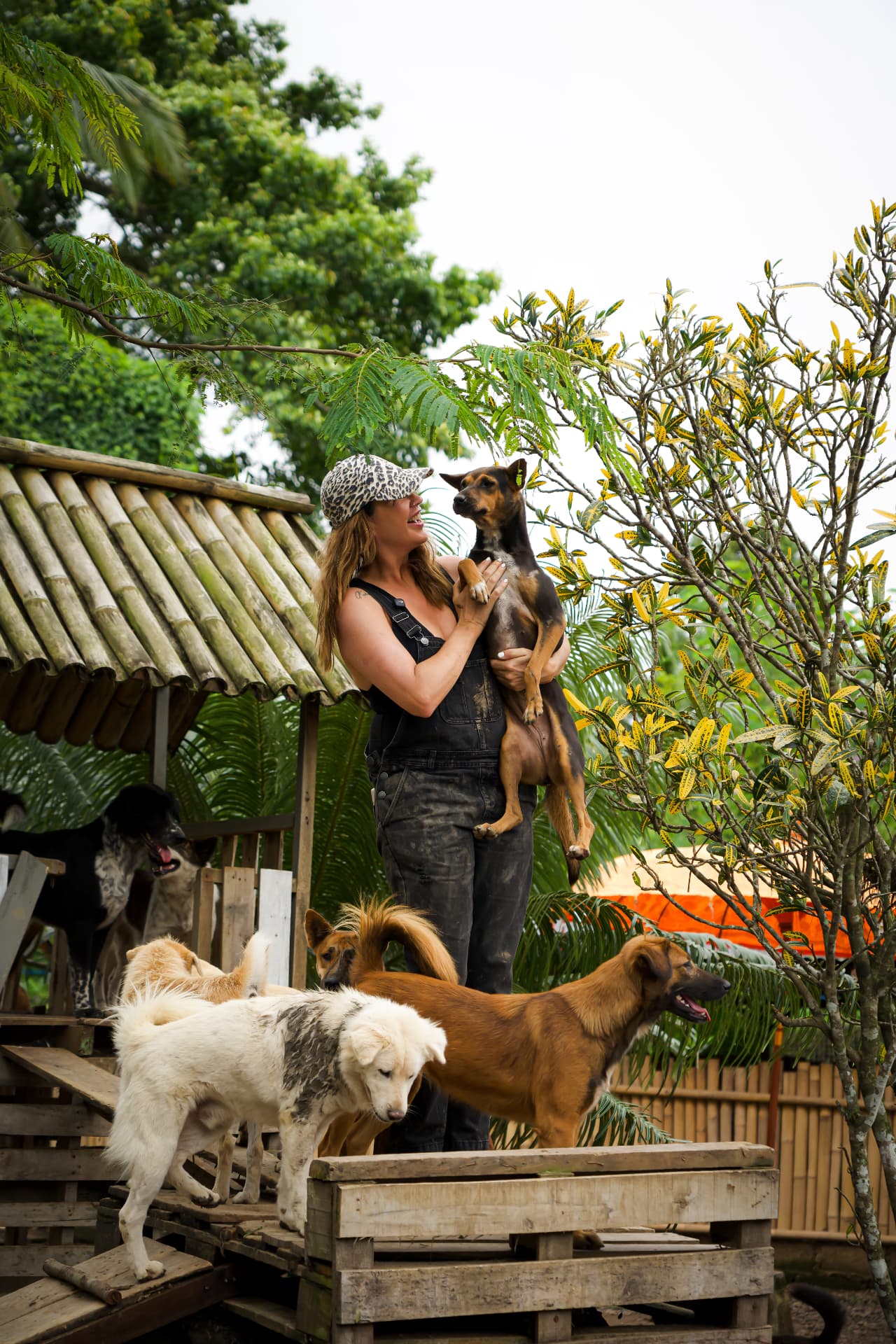
Every donation here is paid for by a rescued dog
These guides are free for everyone. The care behind them costs food, vets and time. $50 a month keeps a GAIA dog safe while we share what we know.